
Micro-fulfillment centers are transforming urban logistics by combining compact urban real estate with advanced robotics to enable same-day and sub-hour delivery. Learn how this $50 billion infrastructure trend is reshaping last-mile delivery in 2026.
Micro-Fulfillment Centers: How Urban Automation Is Reshaping Last-Mile Delivery in 2026
By Sarah Mitchell — Loog.ai Global
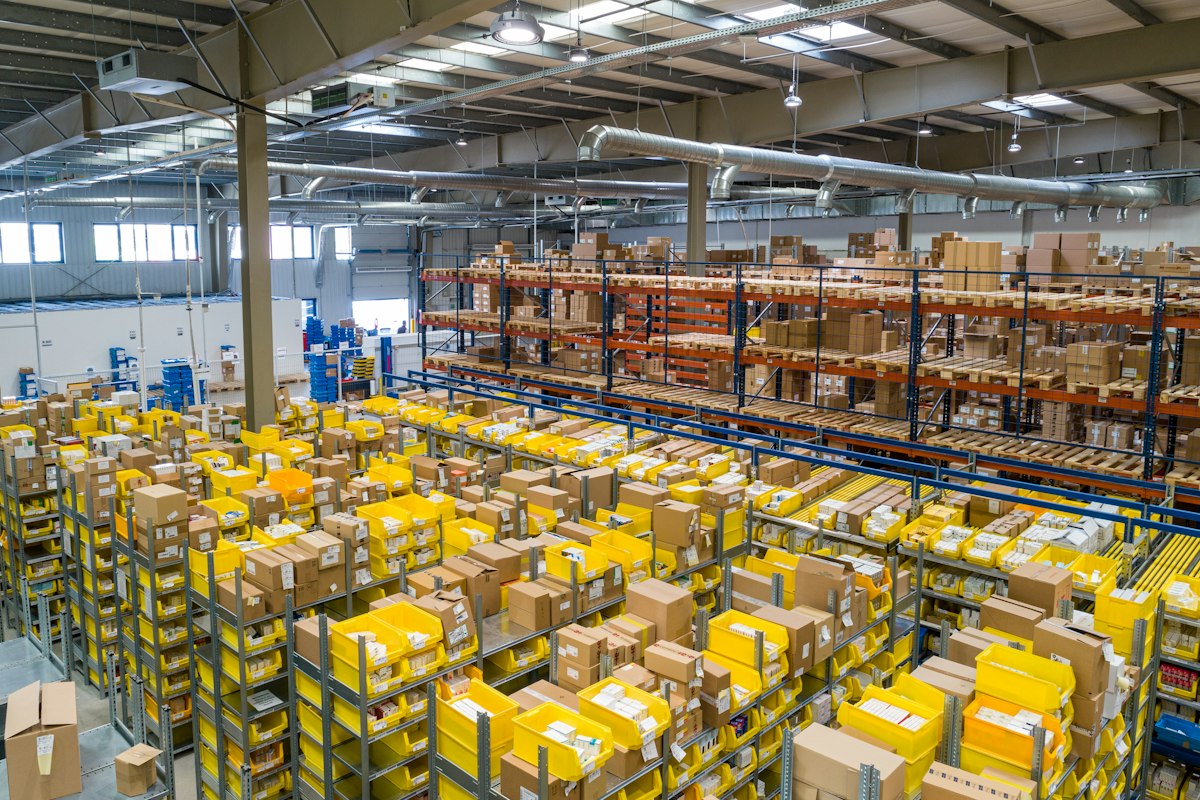
The race for faster delivery has entered a new phase. In 2026, micro-fulfillment centers (MFCs) are emerging as the critical infrastructure powering same-day and sub-hour delivery promises. These compact, highly automated facilities—typically 10,000 to 40,000 square feet—are strategically positioned in urban cores, transforming vacant retail spaces, parking garages, and industrial brownfields into hyper-efficient logistics hubs.
What makes this trend transformative isn't just proximity to customers. It's the marriage of dense urban real estate with advanced robotics that enables MFCs to process thousands of orders daily from footprints a fraction the size of traditional distribution centers. The result is a fundamental reimagining of how e-commerce inventory flows through metropolitan areas.
The Urban Logistics Revolution
Traditional fulfillment centers—often 500,000+ square feet and located on suburban peripheries—face inherent limitations when it comes to rapid urban delivery. The last 50 miles of transport consume disproportionate time and cost. MFCs flip this model by positioning inventory within 5-10 miles of dense population centers.
Major retailers and logistics operators have deployed over 800 MFCs globally in the past 18 months, with the highest concentration in metropolitan areas like New York, London, Shanghai, and Sao Paulo. Industry analysts project the MFC market will grow at a 35% compound annual rate through 2030, representing a $50 billion infrastructure investment.
800+
MFCs deployed globally since 2024
35%
Projected annual growth rate
<1 hr
Average fulfillment time in urban cores
$50B
Projected market size by 2030
Robotics at the Core
The economics of MFCs only work because of advanced automation. Labor costs in urban centers are prohibitive, and space constraints demand vertical storage optimization. Modern MFCs deploy integrated robotic systems that work in concert:
- Autonomous mobile robots (AMRs) navigate narrow aisles to retrieve totes from high-density shelving systems
- Robotic arms handle picking, packing, and sorting with computer vision guidance
- Automated sortation systems route parcels directly to delivery vehicles based on destination zones
- Vertical lift modules maximize storage density in constrained footprints
These systems operate with minimal human intervention. A typical MFC handling 5,000 orders daily might employ only 8-12 staff members, primarily for exception handling, maintenance, and final quality checks. Compare this to a traditional fulfillment center processing similar volumes, which might require 150+ workers.
The Dark Store Evolution
A parallel trend accelerating MFC adoption is the conversion of underperforming retail spaces. As e-commerce continues to reshape consumer behavior, hundreds of urban retail locations have become economically unviable as storefronts. These dark stores—closed to the public but operational as fulfillment centers—offer ideal MFC infrastructure: loading docks, electrical capacity, and prime locations.
Grocery chains have been particularly aggressive in this transformation. Companies like Tesco, Kroger, and Carrefour have converted dozens of urban supermarkets into MFCs, leveraging existing cold chain infrastructure while eliminating unprofitable retail operations. The model allows them to maintain market presence and customer relationships while optimizing for fulfillment economics.
Micro-fulfillment is not just about speed. It is about fundamentally rethinking inventory placement to match where demand actually is, rather than where traditional supply chains dictated it should be.
— McKinsey Supply Chain Insights, January 2026
Challenges and Considerations
Despite the momentum, MFC deployment is not without challenges. Urban real estate remains expensive, and retrofitting older buildings for automation requires significant capital investment. Zoning regulations in many cities have not caught up with the logistics use case, creating permitting delays.
Product selection for MFC inventory also requires sophisticated demand forecasting. These facilities cannot stock unlimited SKUs—typically carrying 2,000-5,000 high-velocity items compared to 100,000+ in regional distribution centers. Getting the assortment right requires AI-driven demand prediction that can identify which products will generate same-day demand in specific neighborhoods.
Traffic and noise concerns from increased delivery vehicle activity have sparked community resistance in some neighborhoods. Operators are responding with electric vehicle mandates, optimized delivery windows, and partnerships with crowdsourced delivery platforms to reduce truck traffic.
Implications for Supply Chain Strategy
For supply chain leaders, the MFC revolution requires rethinking network design. The traditional hub-and-spoke model—large regional DCs feeding smaller local facilities—is giving way to more distributed architectures where inventory sits in multiple echelons, positioned for different service level promises.
This shift has profound implications for inventory management. Instead of centralized safety stock, companies must optimize inventory allocation across dozens or hundreds of nodes. The complexity demands advanced planning systems that can balance service levels, carrying costs, and fulfillment economics in real-time.
Partnership strategies are also evolving. Third-party logistics providers are building multi-tenant MFC networks that allow smaller retailers to access same-day fulfillment capabilities without the capital investment. This fulfillment-as-a-service model is democratizing access to capabilities previously available only to retail giants.
Looking Ahead: The Future of Urban Fulfillment
As we move through 2026, expect MFC capabilities to expand beyond groceries and consumer goods into specialized categories like pharmaceuticals, electronics, and fashion. The model is also extending into secondary cities as automation costs decline and proven operational templates reduce deployment risk.
The integration of MFCs with emerging delivery modalities—autonomous vehicles, drones, and sidewalk robots—will further transform urban logistics. These facilities serve as the ideal launch points for autonomous last-mile solutions, with automated loading systems that can dispatch self-driving delivery vehicles without human intervention.
Ultimately, micro-fulfillment centers represent more than an operational innovation. They signal a permanent shift in consumer expectations and competitive dynamics. Companies that master the MFC model will define the next era of retail and e-commerce, delivering not just products but the instant gratification that increasingly drives purchasing decisions.
Sources:
McKinsey and Company — Supply Chain Insights 2026
Gartner — Future of Logistics Automation
Interact Analysis — Warehouse Automation Report
PwC — Global Consumer Insights Survey 2026
Optimize Your Last-Mile Strategy
Ready to explore how micro-fulfillment and automation can transform your logistics operations? The Loog.AI platform helps you design optimal network configurations, forecast demand at the neighborhood level, and integrate with automated fulfillment solutions. Get ahead of the urban logistics revolution.
Schedule Your Logistics Assessment →

